



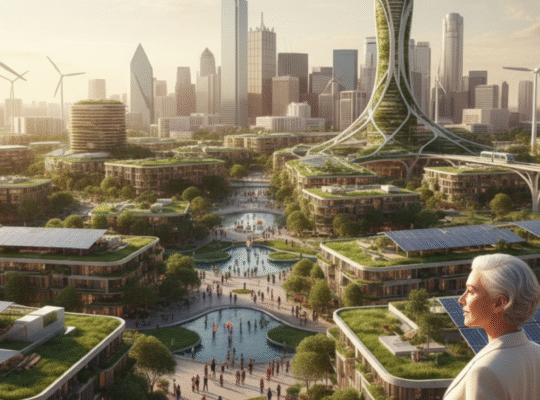
When Maye Musk visited The Sustainable City in Dubai, she didn’t just tour a development — she stepped into a glimpse of what our urban future could be. Rows of solar-powered homes, shaded walkways lined with edible gardens, electric vehicles gliding through car-free streets — it’s the kind of place that makes you pause and ask: Why can’t we build this in the United States?
The Idea That Changed a Desert
Built in what was once barren desert, The Sustainable City has become a living experiment in how design, data, and community can work together for a low-carbon future. The project generates more energy than it consumes, recycles nearly all of its water, and produces zero waste to landfill. It’s proof that sustainability doesn’t have to mean sacrifice — it can mean smarter systems and stronger communities.
When Maye Musk, a longtime advocate for environmental consciousness, walked its tree-lined paths, she called it “the most sustainable city I’ve ever seen.” Her words resonated far beyond Dubai’s borders — because they pointed toward possibility.
Could It Work Here?
America has the land, the technology, and the talent. What it often lacks is the collective will to reimagine cities as ecosystems instead of consumption hubs. The question isn’t whether the U.S. can build a sustainable city — it’s whether we’re ready to rethink how we live, work, and share resources.
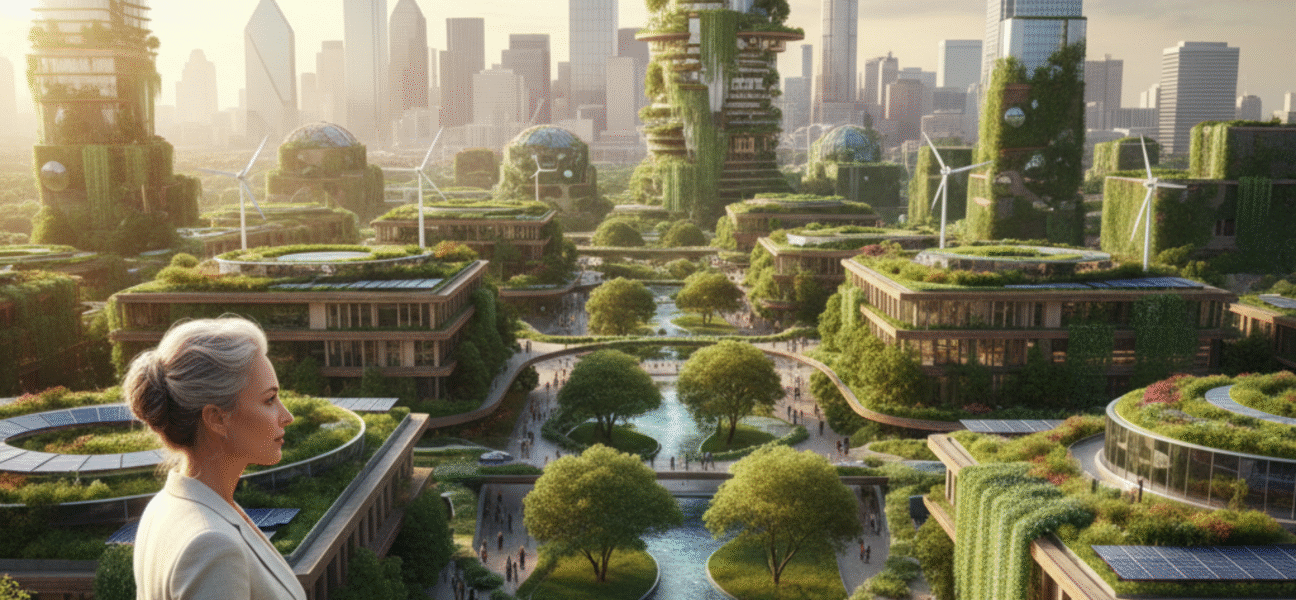
Imagine a city in Texas or California powered entirely by renewables — where homes store solar energy, streets cool naturally with green canopies, and AI systems monitor water and waste in real time. Neighborhoods could be walkable, electric, and inclusive, proving that sustainability isn’t just for the wealthy — it’s for everyone.
“The Sustainable City isn’t about building another luxury project,” its creators often note. “It’s about building a new way of life.”
The Blueprint Already Exists
Dubai’s experiment works because it treats sustainability as infrastructure, not an accessory. It integrates renewable energy, circular design, and behavioral change into the city’s DNA.
Now, similar efforts are emerging stateside — from Tesla’s solar communities in California to other projects in the USA. Each one builds on the same premise: that sustainability can drive economic growth, not hinder it.
According to the U.N., 68 percent of the world’s population will live in urban areas by 2050. That means the choices we make now — where and how we build — will define the climate trajectory for the next century.
A Moment of Choice
Maye Musk’s visit was more than a photo opportunity. It was a mirror moment — a chance to reflect on what’s possible when innovation meets intention.
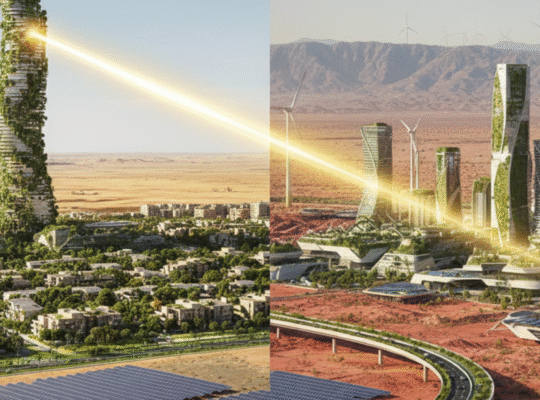
If a carbon-positive city can thrive in the middle of a desert, what could one look like in Dallas, Phoenix, or Denver?
Would children walk to solar-powered schools? Would buildings harvest rainwater from their roofs? Would public parks double as urban farms?
The Future We Build
- Cities are reflections of what we value.
- If we value convenience, we build roads.
- If we value connection, we build communities.
- If we value the planet, we build cities that sustain it.
The Sustainable City shows us that a cleaner, calmer, self-sufficient urban life is not only possible — it’s already here. The real question is: When will we bring it home?
Sources
- Maye Musk on X (formerly Twitter): “So wonderful to meet @farissaeed4666 and explore The Sustainable City — a place where sustainability, happiness, and community come together.” (x.com/mayemusk/status/1980276771258872095)
- The Sustainable City – Dubai. Official website: https://thesustainablecity.com
- Maye Musk on Instagram: “Loved my visit to The Sustainable City in Dubai, an inspiring community that shows how we can live in harmony with nature.” (instagram.com/reel/DFpkAjIJZOC)

3 Comments