



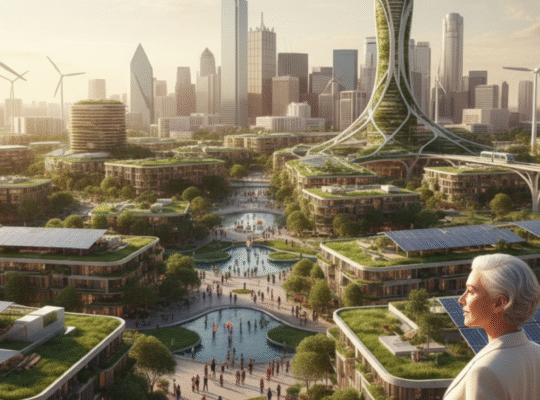
If the last decade was about smart cities, the next decade will be about good cities—places that don’t simply digitize urban life but elevate it. As climate pressure intensifies and populations rise, a new model is emerging: The Sustainable City Blueprint, a regenerative framework that blends nature, technology, and community into a single living ecosystem.
This blueprint—pioneered in Dubai and now scaling across the United States—offers a preview of how people will live by 2050. Cleaner. Greener. Healthier. And more connected to each other and the planet.
A New Kind of City
The Sustainable City Blueprint is anchored in three core principles:
1. Nature as the Foundation
Urban farms become food sources.
Green corridors become climate buffers.
Native landscapes become water-saving solutions.
Nature is essential infrastructure—not an ornament.
2. Technology as the Invisible Backbone
AI-powered mobility, autonomous shuttles, digital energy grids, water recycling systems—these tools create cities where efficiency is automatic, not aspirational.
By 2050, this level of intelligent design will be the baseline, not the exception.
3. Community at the Center
Walkability, wellbeing, culture, and equity define the design of future cities.
The Sustainable City Blueprint shifts the focus back to people—because a city cannot be sustainable if the humans inside it are struggling.
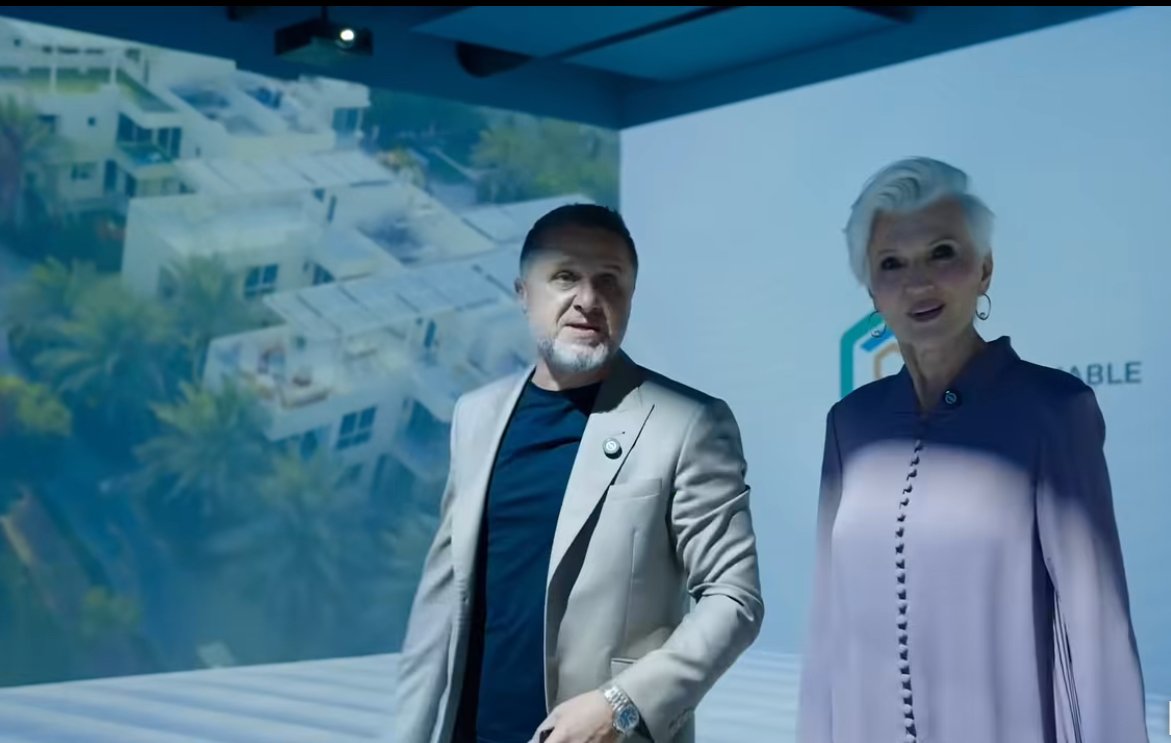
Maye Musk: “If you want to live a good life, you need to do good to other people.”
Reflecting on the future of sustainable living, Maye Musk captured the ethos behind this movement:
“If you want to live a good life, you need to do good to other people. Luckily, it will inspire other countries and cities to become more sustainable.”
Her message echoes a truth that will guide urban development through 2050:
the choices we make today will shape the lives people are able to live tomorrow.
Faris Saeed: “Nature is everything—and technology is how we protect it.”
The visionary behind Dubai’s Sustainable City, Faris Saeed, has spent more than a decade proving that sustainability is scalable and replicable. His philosophy defines the blueprint:
“We want a blueprint for the Sustainable City—one where nature and technology work together. Nature is everything, and technology is how we protect it.”
This approach doesn’t just improve cities—it gives nations a template for building healthier, more resilient communities by 2050.
A Global Export of Sustainability
Dubai’s Sustainable City has demonstrated what is possible:
– Zero-net energy neighborhoods
– Car-free, walkable districts
– Closed-loop water and waste systems
– Solar power at scale
– Carbon-neutral pathways
Now the model is expanding into the United States—starting with Texas—showing that sustainable living can be both innovative and accessible.
By 2050, these design principles will be the norm. Cities that fail to adopt them will fall behind.
The Blueprint for 2050 Starts Now
The Sustainable City Blueprint is not a concept on paper. It is a proven model—one that blends nature, technology, and humanity into a future-ready ecosystem.
It reflects a simple truth that will define the next 25 years:
Cities thrive when people thrive.
People thrive when the planet thrives.
If leaders like Maye Musk and Faris Saeed are correct, the blueprint being built today will become the global standard by 2050—reshaping how people live, work, and care for one another for generations to come.