



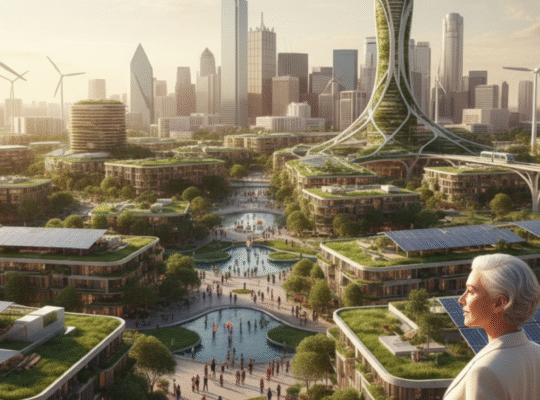
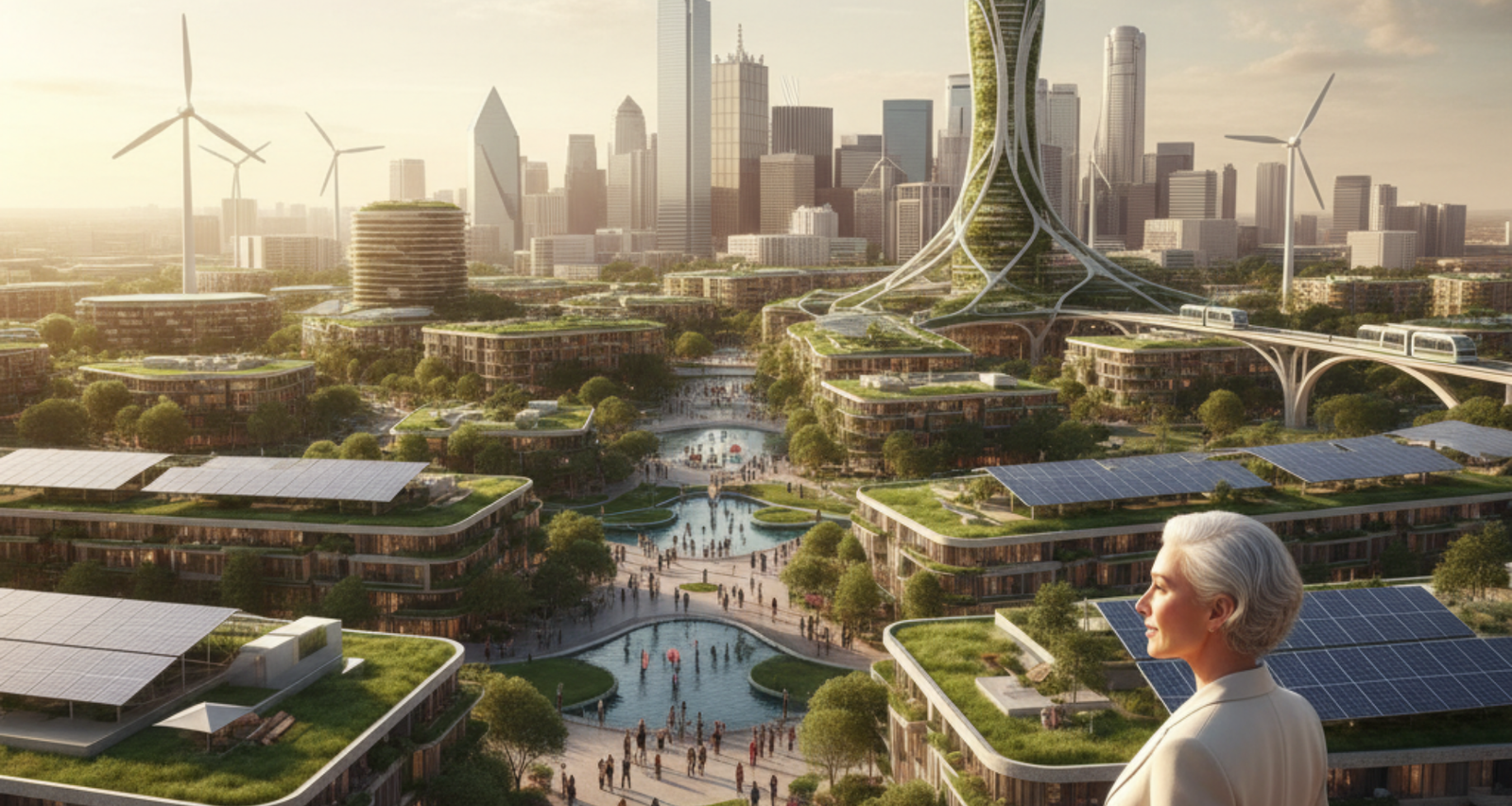
In a world where cities contribute over 70% of global carbon emissions, Dubai has quietly done something extraordinary—it built a community that gives more than it takes. The Sustainable City, developed by SEE Holding, has become the planet’s most successful experiment in net-zero living. And the question for U.S. policymakers and investors is simple: What if we had this here?
Spanning 46 hectares on Dubai’s outskirts, the Sustainable City produces more energy than it consumes. Its 10,000 solar panels generate 120% of the community’s needs. Every home is designed for passive cooling, recycling 100% of its wastewater for irrigation. The result: zero service bills for residents and an annual carbon footprint reduction exceeding 9,000 tons of CO₂, according to SEE Holding’s 2025 Impact Report.
“The future city must be self-sufficient, circular, and inclusive,” says Faris Saeed, Founder and Chairman of SEE Holding, in a 2025 Bloomberg Green interview. “We’ve proven that sustainability can be both profitable and joyful.”
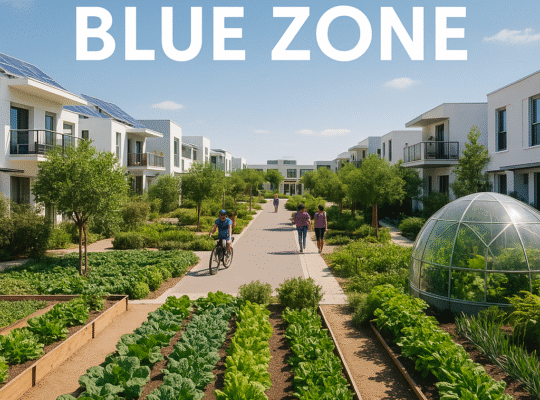
Residents live among shaded walkways, car-free zones, organic farms, and electric buggies instead of cars. The development’s school teaches renewable-energy literacy, while its Equine Therapy Center doubles as a community wellness hub.
If replicated in the U.S., such a city could address some of the country’s most pressing issues—housing affordability, energy dependency, and climate resilience.
“This isn’t just an environmental model,” notes Dr. Laura T. Smith, urban design professor at Stanford. “It’s a financial model that rewards efficiency over excess.”
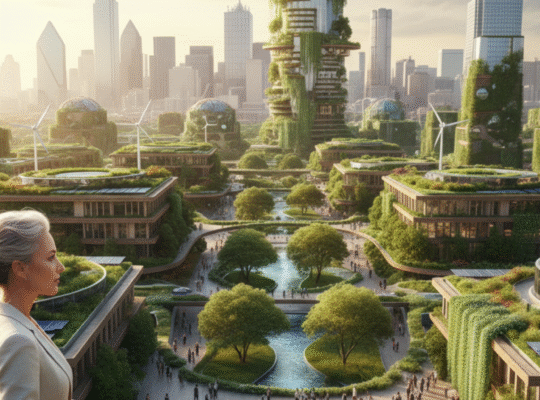
Imagine a version of this outside Dallas or Phoenix: solar-powered housing, urban farming co-ops, and shared mobility hubs reducing transportation emissions by half. With U.S. federal incentives from the Inflation Reduction Act, the economics could actually outperform traditional suburban development by 2030.
The Sustainable City isn’t science fiction—it’s proof of concept. The question isn’t if America can do it. It’s when.
Sources: SEE Holding Impact Report (2025), Bloomberg Green (Apr. 2025), Stanford Urban Design Forum (2025).

2 Comments