Cricket’s growth in North America has long been talked about. What’s been missing is structure.
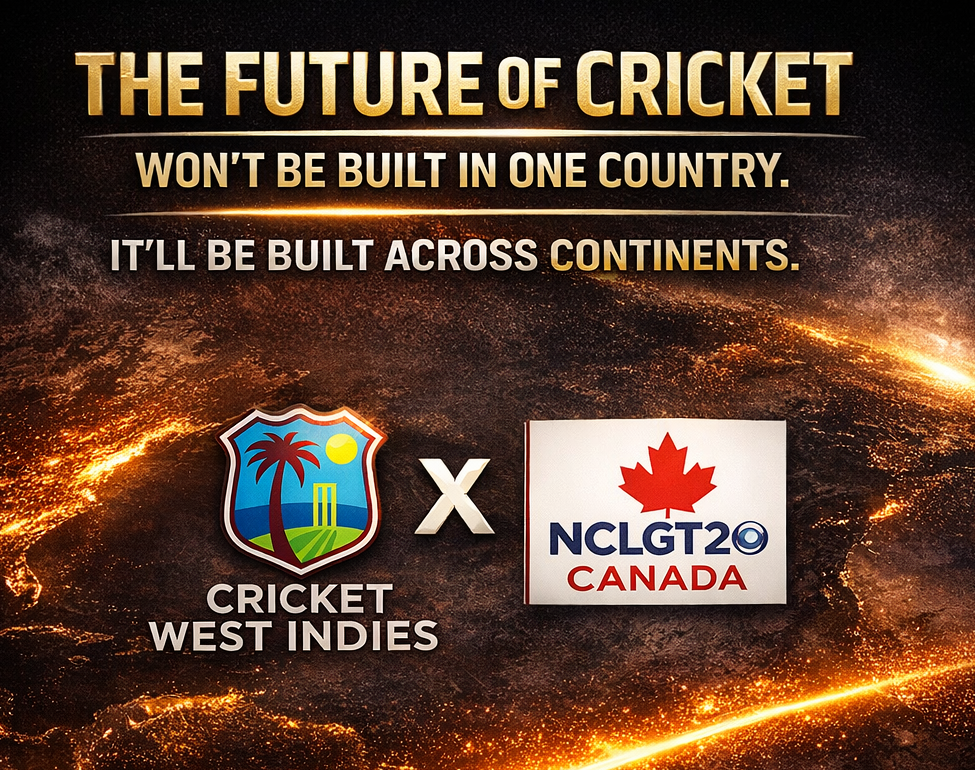
A newly advanced partnership between Cricket West Indies and NCL GT20 Canada changes that—connecting grassroots participation with a clear path to professional cricket.
At its core, this is a development play.
For years, young players in Canada have had limited access to high-performance training and consistent competitive opportunities. This collaboration begins to close that gap by linking local talent to the Caribbean’s established cricket ecosystem, including access to elite training environments and expanded tournament pathways.
The result is something the region has lacked: continuity.
As NCL GT20 Canada Chairman Arun Agarwal noted, the goal is to create “a clear, credible path from learning the game to playing it professionally.”
That shift—from participation to progression—is what turns grassroots momentum into long-term growth.
Canada’s role in this strategy is no coincidence. With a diverse, cricket-engaged population and rising youth participation, the country is emerging as one of the sport’s most promising new markets. For Cricket West Indies, it represents both a development opportunity and a significant commercial frontier.
But the implications go beyond geography.
This partnership signals a broader evolution in how cricket expands globally—through connected ecosystems rather than isolated leagues. With discussions that include ownership stakes, franchise integration, and cross-regional competition, the foundation is being laid for a more unified cricket economy across North America and the Caribbean.
For decades, cricket in North America has been defined by potential.
This is what it looks like when that potential starts to take shape.