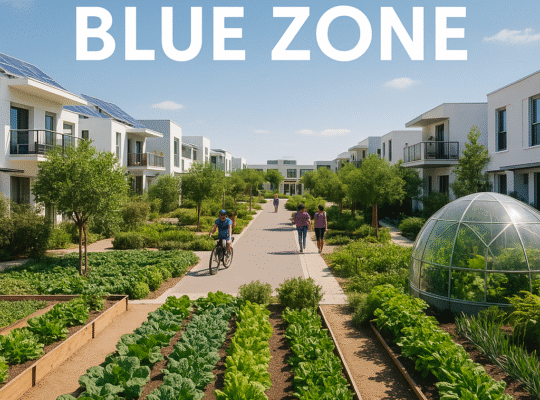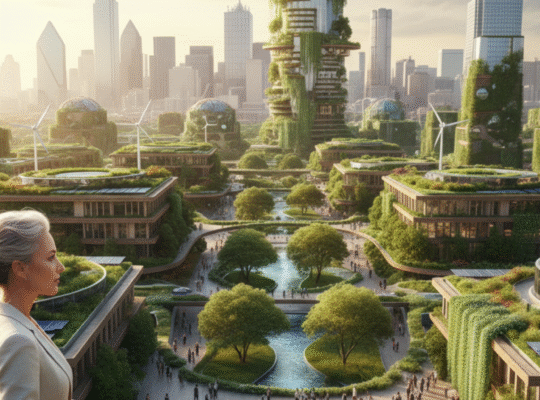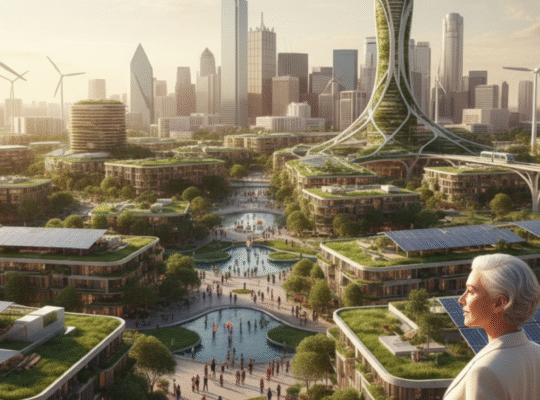
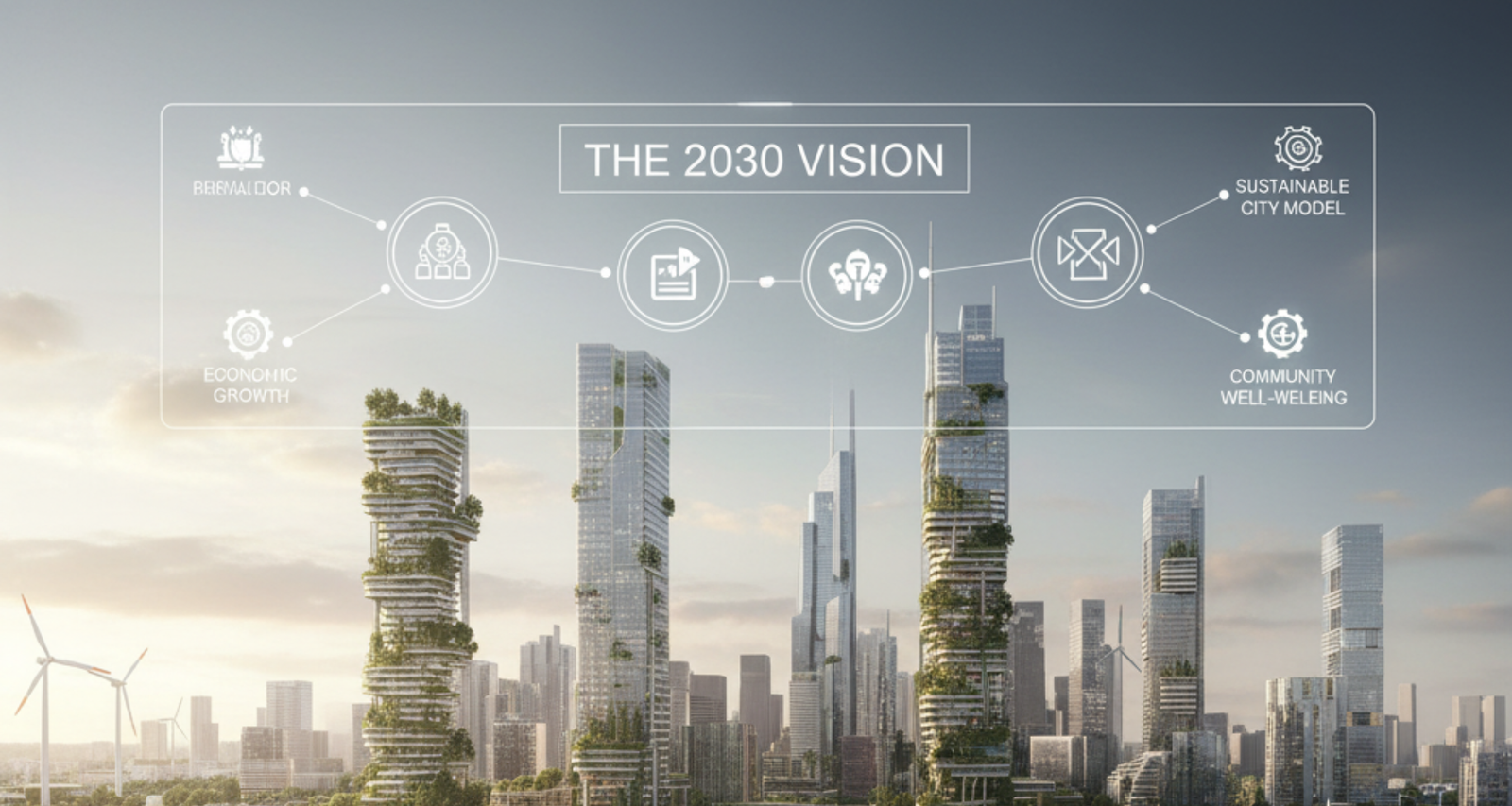
When SEE Holding unveiled The Sustainable City in Dubai in 2016, it wasn’t just creating a neighborhood—it was launching a new philosophy of growth. The premise: sustainability must be measurable, replicable, and economically viable.
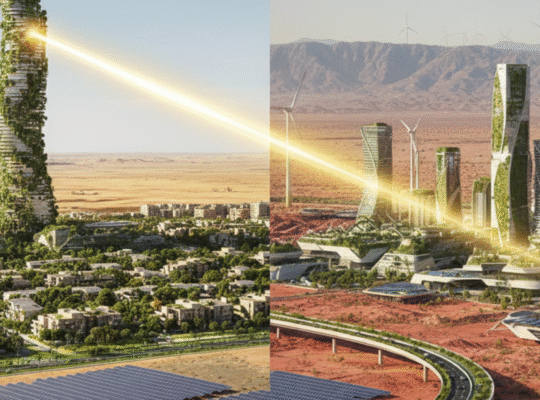
A decade later, the model is expanding worldwide—from Sharjah to Abu Dhabi, Yiti (Oman), and now plans for The Sustainable City USA in Texas. The goal is to make sustainability a global export industry, not a local luxury.
“We’re not in the business of building green cities,” said Bahaa Al-Husseiny, CEO of SEE Holding, at the 2025 World Government Summit. “We’re building economies of purpose.”
Each Sustainable City project follows a three-pillar framework: social, environmental, and economic sustainability. Residents enjoy 50% lower energy bills, solar infrastructure creates local jobs, and green mobility cuts urban noise and emissions by 70%.
If brought to the U.S. at scale, the implications are massive. The National Renewable Energy Laboratory (NREL) estimates that net-zero mixed-use developments could inject $2 trillion into the American economy by 2040 through construction, clean tech, and long-term energy savings.
Beyond economics, the social dimension could redefine urban living. Communal farming plots, zero-waste recycling loops, and shared wellness centers foster a sense of interdependence often missing in sprawling suburbs.
“The Sustainable City shows that progress doesn’t have to mean pollution,” said Inger Andersen, Executive Director of the UN Environment Programme, during COP28. “If the U.S. adopts even a fraction of this vision, it could shift global momentum.”
As SEE Holding prepares to break ground on Sustainable City USA, the message is clear: Dubai may have built the prototype—but America could build the legacy.
Sources: World Government Summit (2025), UN Environment Programme (2024), NREL Clean Energy Economy Report (2025).